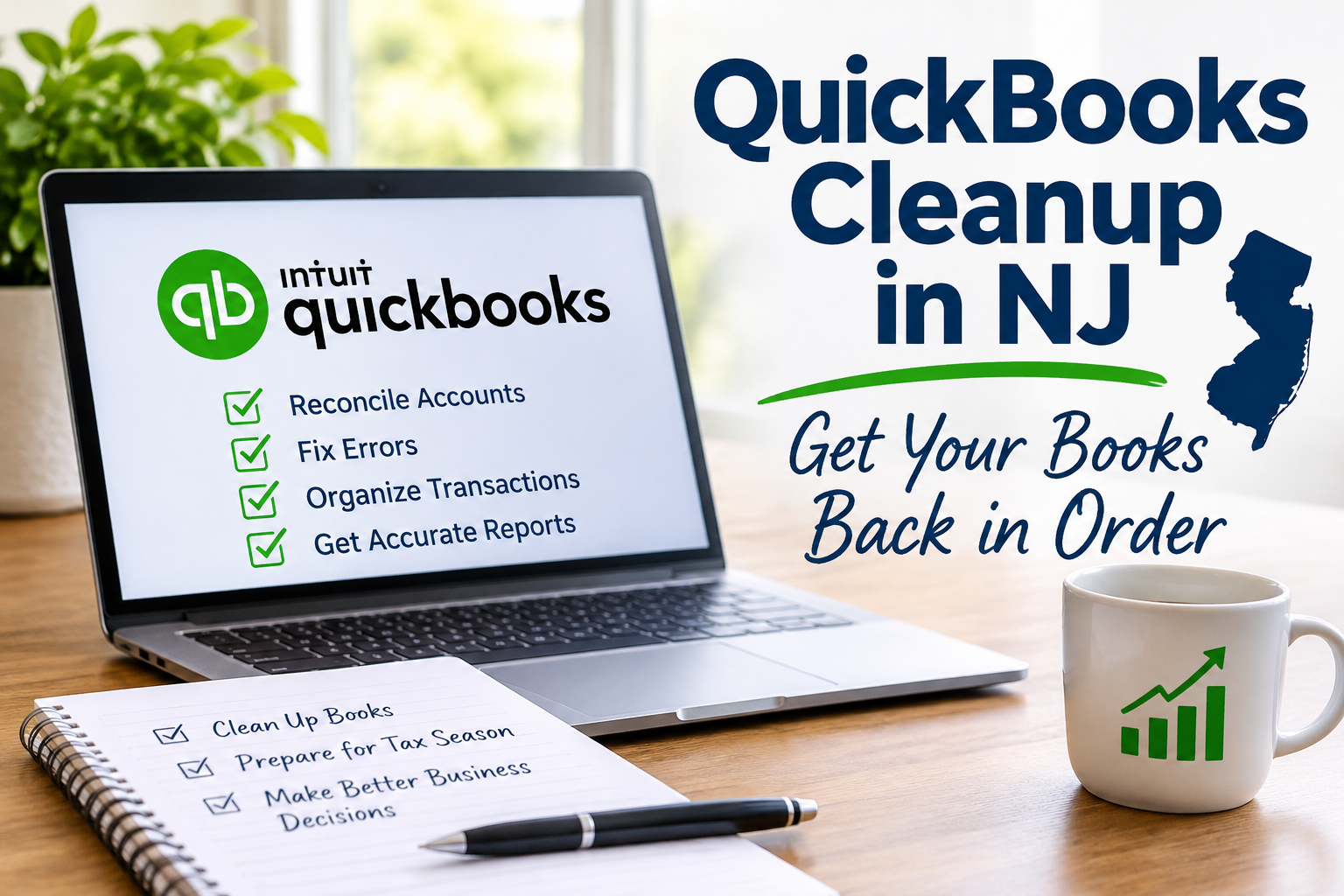
Most business owners don't think of bookkeeping as a tax strategy. It feels like housekeeping, something to deal with when there's time. But your books are the raw material for everything else: your tax return, your cash flow decisions, your loan applications, and your tax planning. If the raw material is wrong, every decision built on top of it is shaky.
That's why QuickBooks cleanup is often the very first step when we begin working with a new client.
Signs Your QuickBooks File Needs Attention
You don't need to be an accountant to spot a file in trouble. Watch for these red flags:
- Bank and credit card accounts that haven't been reconciled in months, or ever.
- A large "Uncategorized" or "Ask My Accountant" balance that keeps growing.
- Personal and business expenses mixed together in the same accounts.
- Duplicate vendors or customers, and transactions entered twice.
- Payroll liabilities that don't match what you actually owe or have paid.
- Reports that don't make sense, such as negative balances where there shouldn't be any.
- A profit figure that doesn't match your bank balance in any way you can explain.
If you recognized two or three of these, you're in good company. Many busy owners are in the same position, especially in the first few years of growth.
What Messy Books Actually Cost You
The damage rarely shows up as a single dramatic bill. It leaks out in smaller ways:
- Missed deductions. Expenses that never get recorded or get miscategorized never reach your return.
- Higher preparation costs. A tax professional has to untangle problems before preparing the return.
- Poor decisions. If you can't trust your profit and loss statement, you can't price, hire, or invest with confidence.
- Lending and valuation problems. Banks and buyers want clean financials.
- Compliance risk. Payroll and sales tax errors can lead to penalties.
What a QuickBooks Cleanup Involves
A proper cleanup is more than tidying up categories. Typically, it includes:
- Reviewing the file's current state and identifying what's wrong.
- Reconciling every bank and credit card account to statements.
- Correcting categories and clearing out holding accounts.
- Merging duplicates and fixing vendor and customer records.
- Checking payroll and liability accounts for accuracy.
- Separating personal from business activity.
- Setting up a structure that keeps the books clean going forward.
Dan Vigilante is a Certified QuickBooks Online Advisor, so the cleanup is done by someone who knows the software and understands how the numbers flow into your return.
Cleanup Is the Foundation. Maintenance Keeps It Clean.
Many owners clean up their books once and watch them drift again within a year. The fix is a rhythm: regular reviews, monthly or quarterly reconciliations, and a short check-in on the numbers. That's why our approach pairs cleanup with ongoing support. Our post on
business tax coaching for Boonton Main Street businesses explains how quarterly coaching and bookkeeping work together for small storefronts, and our guide to
tax strategies for Rockaway retail, restaurant, and service businesses shows why inventory, payroll, and sales tax records matter so much.
Why Clean Books Make Tax Planning Possible
Proactive tax planning means looking ahead, projecting income, modeling options, and acting before year-end. None of that works without reliable numbers. Clean books let us:
As we explain in
the real benefits of hiring a tax consultant, a consultant who works with your books year-round catches problems that a once-a-year preparer never sees.
When to Clean Up: Sooner Than You Think
The best time for a cleanup is before you need the numbers, not while a deadline is bearing down. If you're approaching year-end, a clean file lets you make planning decisions with real data. If you've already filed a return based on flawed books, a cleanup may also reveal whether an amended return is worth considering.
How We Work With You
Our
process begins with a conversation about your finances, followed by a documentation review, a presented plan, and help putting it into action. For a business with messy books, that review is where we find what needs fixing first. Learn more
about Dan, explore our
business tax planning services, or see the
towns we serve throughout Morris County and nearby communities.
Start With a Free Conversation
If your QuickBooks file is making you nervous, there's no need to wait for it to get worse.
Request a free 30-minute virtual consultation or call (973) 240-9599, and we'll tell you what condition your books are in and what it would take to get them right. Our
FAQs cover common questions, and you can always
contact us directly.